
⭐ How to Identify Your Skin Type – Complete Beginner Guide
Knowing How to Identify Your Skin Type is the first and most important step in building a proper skincare routine. Many people in Pakistan and worldwide waste money on skincare products simply because they don’t understand their skin type. Using the wrong products can cause acne, dryness, irritation, or dull skin. This guide will help you accurately identify your skin type at home and choose the right skincare solutions.
Why Identifying Your Skin Type Is Important?

Understanding your skin type helps you select products that actually work. Each skin type reacts differently to ingredients, weather, and lifestyle. When you know your skin type, you can avoid breakouts, dryness, irritation, and premature aging. It also helps you build an effective routine and protects your skin barrier. Whether you live in Pakistan’s hot climate or anywhere else, correct identification leads to healthier, glowing skin.
Common Skin Types Explained
1. Normal Skin
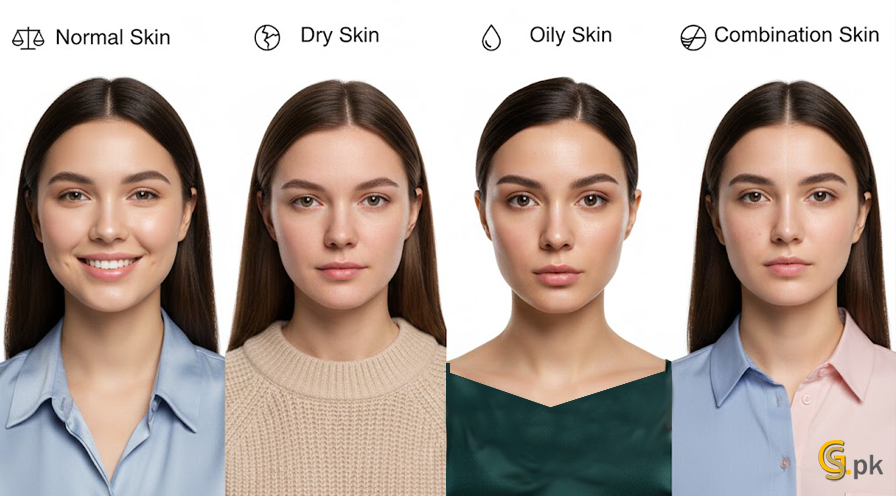
Normal skin is balanced — not too oily and not too dry. It has small pores, smooth texture, and minimal sensitivity. People with normal skin rarely experience breakouts or flakiness. Their skin feels comfortable throughout the day and reacts well to most products. However, even normal skin needs protection, hydration, and sunscreen to maintain long-term health and prevent early aging.
2. Dry Skin
Dry skin lacks natural oils and moisture, making it feel tight, rough, or flaky. It may appear dull and develop fine lines early. In Pakistan, dry skin often worsens during winter or due to harsh cleansers. This skin type needs deep hydration, gentle cleansers, and barrier-repairing ingredients. If untreated, dryness can cause sensitivity and irritation.
👉 Related read: Home Remedies for Dry Skin
3. Oily Skin
Oily skin produces excess sebum, making the face shiny, especially on the forehead, nose, and chin. Enlarged pores and frequent breakouts are common. Pakistan’s hot and humid weather often increases oil production. Oily skin still needs hydration but with lightweight products. Using harsh products can make oiliness worse by damaging the skin barrier.
👉 Related read: Skincare Routine for Oily Skin in Pakistan
4. Combination Skin
Combination skin has both oily and dry areas. Typically, the T-zone is oily while cheeks are dry or normal. This skin type is very common in Pakistan. It requires balanced skincare — oil control for the T-zone and hydration for dry areas. Using one product for the entire face may not work, so targeted care is best.
5. Sensitive Skin
Sensitive skin reacts easily to products, weather, or pollution. It may sting, burn, itch, or become red quickly. This skin type needs fragrance-free, gentle products. In Pakistan, pollution and sun exposure can worsen sensitivity. Strengthening the skin barrier is essential to reduce reactions and discomfort.
👉 Related read: What Is Skin Barrier
Simple At-Home Tests to Identify Your Skin Type
1. Bare Face Test
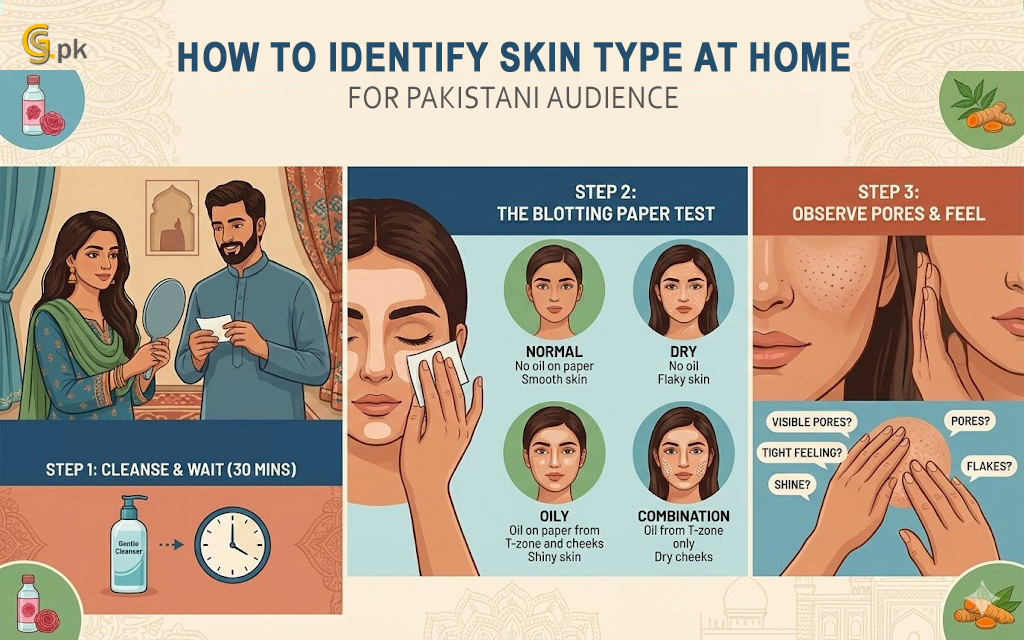
Wash your face with a gentle cleanser and don’t apply any products. Wait for 30–60 minutes. If your skin feels tight, it’s dry. If it looks shiny, it’s oily. If only the T-zone is oily, you have combination skin. If it feels comfortable, you likely have normal skin. Any irritation indicates sensitive skin.
2. Blotting Paper Test
Press blotting paper on different areas of your face after a few hours. If it absorbs oil from all areas, your skin is oily. Oil only from the T-zone means combination skin. Little or no oil indicates dry or normal skin. This test is easy and accurate, especially in humid climates like Pakistan.
3. Product Reaction Test
Apply a mild product on a small area of your skin. If redness, itching, or burning occurs, you may have sensitive skin. If your skin absorbs it well without reaction, sensitivity is less likely. This test helps identify product compatibility and skin tolerance.
How Climate Affects Your Skin Type?
Climate plays a major role in skin behavior. Pakistan’s heat increases oil production, while winter causes dryness. Humidity can worsen acne, and pollution weakens the skin barrier. Your skin type may change slightly with seasons, so skincare should be adjusted accordingly. International readers may experience similar changes based on weather and lifestyle.
Choosing Products After Identifying Skin Type

Once you know your skin type, selecting products becomes easier. Dry skin needs moisturizers and hydrating serums. Oily skin benefits from lightweight gels. Combination skin requires balanced care. Sensitive skin needs barrier-repair ingredients. Sunscreen is essential for all skin types.
👉 Helpful guide: Best Sunscreens for Dry Skin in Pakistan
👉 Also read: Best Vitamin C Serums in Pakistan
Mistakes People Make When Identifying Skin Type
Many people confuse dehydrated skin with dry skin. Others assume oily skin doesn’t need moisturizer. Using harsh cleansers before testing can give wrong results. Skin type can also change over time, so reassessment is important. Avoid copying routines from others without knowing your own skin type.
FAQs – How to Identify Your Skin Type?
Q1: Can skin type change over time?
Yes, age, weather, hormones, and lifestyle can change your skin type.
Q2: Can I have acne with dry skin?
Yes, acne can occur on any skin type, including dry skin.
Q3: Is oily skin bad?
No, oily skin ages slower but needs proper care.
Q4: How often should I check my skin type?
Every 6–12 months or when your skin changes.
Q5: Is sensitive skin a type or condition?
It’s a condition that can occur with any skin type.
Q6: Should men identify their skin type too?
Yes, skincare basics apply to everyone.
Conclusion
Learning How to Identify Your Skin Type helps you build an effective skincare routine and avoid common skin problems. This guide makes it easy for Pakistani and international readers to understand their skin without professional tools. Once identified, choosing the right products becomes simple, effective, and budget-friendly. Healthy skin starts with the right knowledge.